Franz Liszt
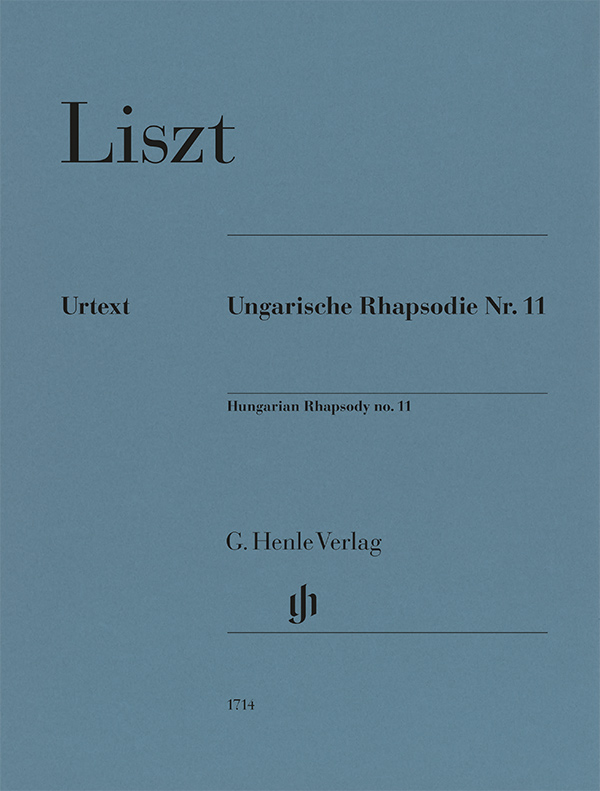
Hungarian Rhapsody no. 11
The eleventh Hungarian Rhapsody, published in 1853, is based on four themes of Hungarian character whose origins have not yet been determined: Liszt may have noted them down by ear during his trip to Hungary in 1846. Introduced by a soft tremolo quasi cimbalo, a folk-like song, a dance and two csárdás compositions are heard one after the other, whereby echoes of the then popular so-called “gypsy bands” are unmistakable. In a manner unique even within the cosmos of the “Rhapsody” series, the tempo is increased in each new section and the piano texture becomes denser. Parallel to this, the harmonic scope widens, whereby the journey leads from A minor through A major to the brilliant stretta in F-sharp major.
For the Urtext edition, which for the first time also takes into account the preserved autograph, two renowned Liszt specialists could once again be engaged: Mária Eckhardt for the preface and Vincenzo Maltempo for the fingerings.
About the Composer
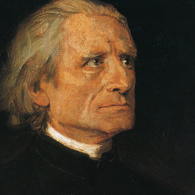
Franz Liszt
The most famous piano virtuoso of the nineteenth century is regarded as the most influential artist and composer (with Berlioz, Wagner) of the so-called New German School. His immense musical oeuvre comprises, above all else, works for solo piano, including numerous transcriptions; he also devised the symphonic poem. Important, too, are his sacred and secular choral works and songs.
| 1811 | Born in Doborján/Raiding (Sopron) on October 22, son of an official in the service of Prince Esterházy. First piano lessons from his father, early first attempts at composition, first public performance at age nine. |
| 1822 | Relocation of the family to Vienna, studies with Carl Czerny and Antonio Salieri. |
| 1823 | Relocation of the family to Paris. Composition studies with Ferdinando Paër and Antonín Reicha (1826). Performances in salons, concerts. |
| 1824–27 | Concert tours through France, to England and Switzerland. Composition of opera paraphrases for piano. |
| 1830 | Acquaintance with Berlioz, self-study by reading. He becomes Parisian society’sfavourite pianist and piano teacher. |
| 1835 | He moves to Switzerland with Countess Marie d’Agoult: their first child together, Blandine-Rachel, is born here. He continues concertizing in Paris. |
| from 1839 | Continuous concert tours throughout Europe. |
| from 1847 | Symphonic poems, including No. 2, “Tasso: lamento e trionfo”; No. 1, “Ce qu‘on entend sur la montagne” (‘Bergsymphonie,’ ‘Mountain Symphony’); “A Faust Symphony in Three Character Pictures”; “A Symphony to Dante’s Divine Comedy” (‘Dante Symphony’); as well as [No. 11], “Hunnenschlacht” (“Battle of the Huns”). |
| 1848–61 | Kapellmeister in Weimar; he advocates for progressive music (Wagner, Schumann, Berlioz). |
| 1857–62 | Oratorio, “The Legend of St. Elisabeth.” |
| 1861–68 | Resident in Rome. |
| 1865 | Takes minor holy orders. |
| 1866–72 | Oratorio, “Christus.” |
| 1871 | Appointed Hungarian court councilor; he lives in Rome, Weimar, and Budapest. |
| 1886 | Death in Bayreuth on July 31. |
About the Authors
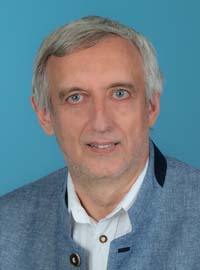
Peter Jost (Editor)
Dr. Peter Jost, born in 1960 in Diefflen/Saar, read musicology, German and comparative studies at Saarland University in Saarbrücken. He did his PhD in 1988 with a thesis on Robert Schumann’s Waldszenen.
From November 1991 to April 2009 he was a research associate at the Richard Wagner Complete Edition in Munich, and since May 2009 has been an editor at Henle Publishers. His Urtext editions comprise predominantly French music of the 19th and 20th centuries, including works by Lalo, Saint-Saëns and Ravel.
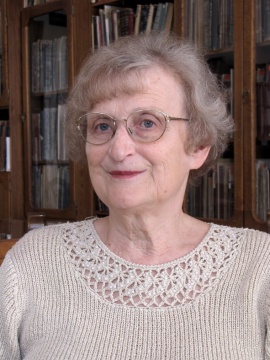
Mária Eckhardt (Preface)
Mária Eckhardt, born in 1943 in Budapest, studied at the Budapest Academy of Music (Liszt Ferenc Academy of Music, today University of Music), and in 1966 she graduated with a diploma in choral conducting and teaching music. After holding different posts at the Hungarian National Library Széchényi and at the Institute for Musicology at the Hungarian Academy of Sciences she worked at the Liszt Ferenc Memorial Museum and Research Centre of the Liszt Academy of Music, of which she was Head between 1986 and 2009.
Eckhardt has been awarded numerous prizes for her Liszt research, in Hungary, and also in Europe and the US. Alongside Franz Liszt, her main research interests include the musical life of the 19th century and Hungary’s musical history.
Product Safety (GPSR) and Warranty

Günter Henle Verlag e.K.
Here you find information about the product’s manufacturer:Günter Henle Verlag e.K.
Forstenrieder Allee 122
81476 München
Germany
info@henle.de
www.henle.com
recommendations
autogenerated_cross_selling
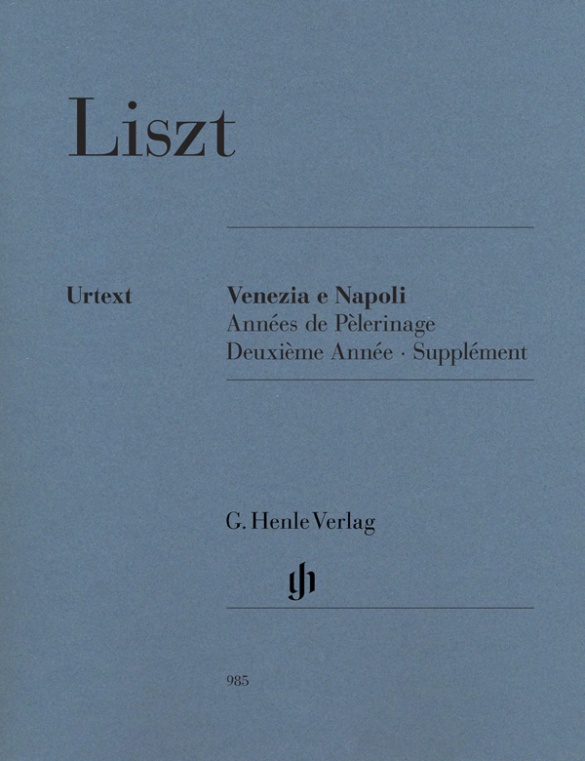
Further editions of this title