Felix Mendelssohn Bartholdy
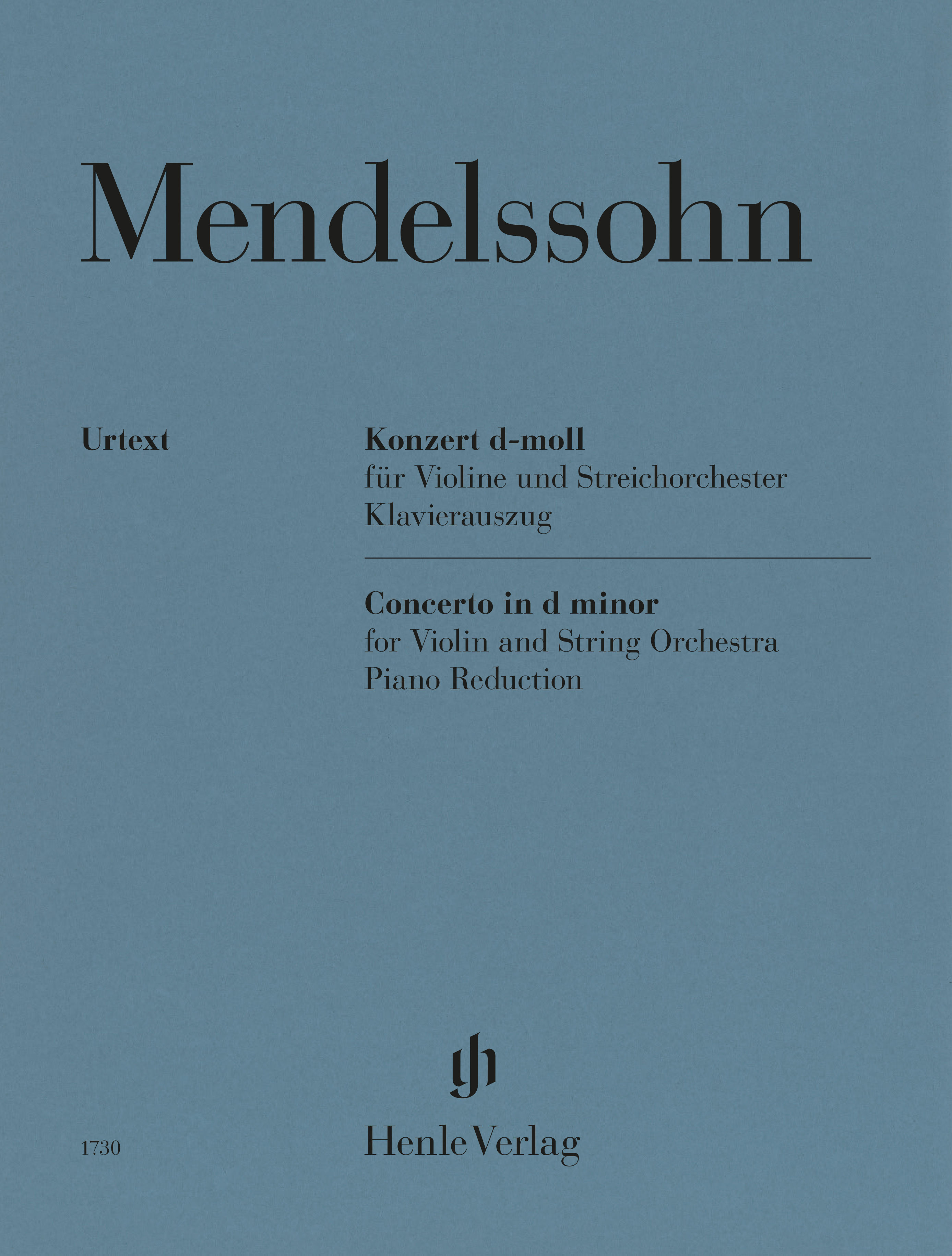
Violin Concerto d minor MWV O 3
At the age of just ten, the young Felix Mendelssohn Bartholdy was studying not only the piano and the basics of composition, but also the violin. In 1819–20, he composed first short pieces for piano and violin, before going on to write his first violin concerto in 1822 for his violin teacher and close friend Eduard Rietz. Whether it was actually performed at the time is not documented.
However, two surviving autograph scores testify to the compositional precociousness of the thirteen-year-old. Because the manuscripts remained privately owned for a long time, this sibling work of the famous E-minor Concerto came to the attention of a wider audience only in the mid-twentieth century. Today, with its wonderful melodies and spirited finale, it would be impossible to imagine its absence from the concert hall.
Christoph Sobanski has, as always, prepared a readily playable piano reduction for this Urtext edition. The fingerings in the violin part were contributed by Antje Weithaas, to whom this concerto is particularly dear.
About the Composer
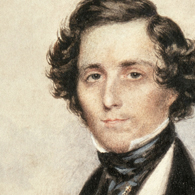
Felix Mendelssohn Bartholdy
A German composer, conductor, pianist, and organist who already numbered among the most important composers in Europe during his lifetime. While still young he found a unique tonal language. Reflected in his oeuvre, which spans all genres, are the contradictory tendencies of the age – Classicism and Romanticism. His endeavors over the course his life to perform the works of Johann Sebastian Bach led to a “rediscovery” of that composer which continues unabated. His intensive engagement with Bach and his counterpoint influenced his own compositional technique.
| 1809 | Born into a wealthy banker’s family in Hamburg on February 3. Escape to Berlin with his parents in 1811. First musical instruction from his mother. |
| 1819 | He becomes a pupil of Carl Friedrich Zelter. |
| 1820 | Joins the Sing-Akademie in Berlin. |
| 1821–23 | Twelve sinfonias for strings. |
| 1825 | String Octet in E-flat major, Op. 20. |
| 1826 | Overture to “A Midsummer Night’s Dream,” Op. 21 |
| 1827 | Begins studies at the University of Berlin. |
| 1829 | Revival of Bach’s St. Matthew Passion in Berlin on March 11 and 21. Travels to England and Scotland. |
| 1829–30 | “Reformation” Symphony in D minor, [Op. 107], with inclusion of the choral “Ein feste Burg“ (A Mighty Fortress Is Our God.) |
| 1830–32 | Extended travels, including to Italy and France. Piano Concerto in G minor, Op. 25; Overture in B minor, Op. 26, “The Hebrides, or Fingal’s Cave” (1829–30). |
| 1833 | Music director in Düsseldorf. “Italian” Symphony in A major, Op. 90 (1830–33). |
| 1835 | Director of the Gewandhaus concerts in Leipzig. |
| 1836 | Premiere in Düsseldorf of his oratorio “St. Paul: Oratorio on Words of the Holy Bible,” Op. 36. |
| 1838-44 | Violin Concerto in E minor, Op. 64. |
| 1840 | Composition of “Hymn of Praise, a Symphony-Cantata on Words of the Holy Bible,” Op. 52. |
| 1841 | Berlin, in the service of the Prussian king. “Variations sérieuses” in D minor, Op. 54, for piano. |
| 1842 | Completion of Symphony No. 3 (“Scottish”) in A minor, Op. 56, with a songlike opening. |
| 1843 | Incidental music to Shakespeare’s “A Midsummer Night’s Dream,” Op. 61. Director of the newly founded Leipzig Conservatory. |
| 1846 | Premiere of his oratorio “Elijah,” Op. 70, in Birmingham. |
| 1847 | String Quartet in F minor, [Op. 80]. Death in Leipzig on November 4. |
About the Authors

Antje Weithaas (Fingering and bowing for Violin)
Product Safety (GPSR) and Warranty

Günter Henle Verlag e.K.
Here you find information about the product’s manufacturer:Günter Henle Verlag e.K.
Forstenrieder Allee 122
81476 München
Germany
info@henle.de
www.henle.com
recommendations
autogenerated_cross_selling
Further editions of this title

Further editions of this title