Manuel de Falla
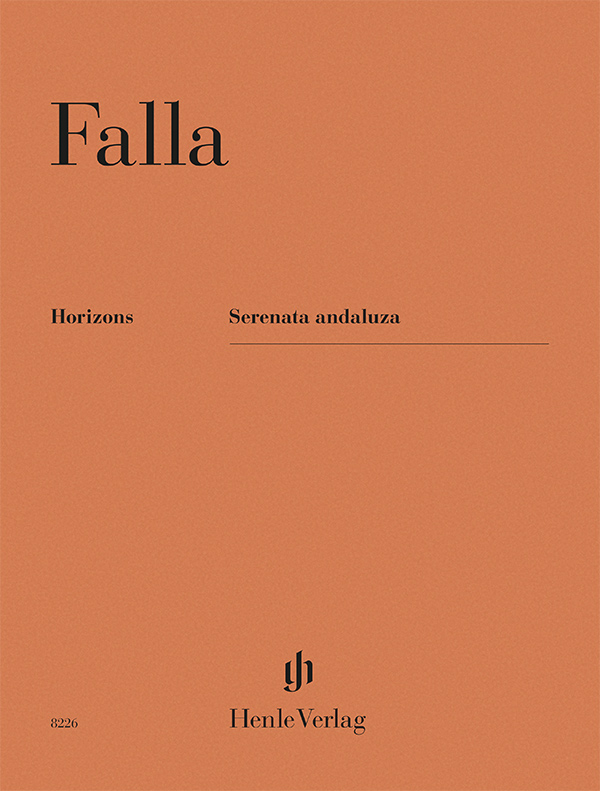
Serenata andaluza
Manuel de Falla’s “Serenata andaluza” was composed around 1900 and already displays the young composer’s distinctive style: melodies inspired by Spanish folklore and rousing Andalusian rhythms mix with impressionistic timbres. The charming work is of medium difficulty and thus also manageable for advanced amateurs – a wonderful introduction to Manuel de Falla’s musical world. This new edition – the only one on the market which offers a carefully reviewed musical text – impresses with its optimal, easy-to-read notation, and thus finally provides the perfect foundation for the study of this enchanting serenade.
About the Composer
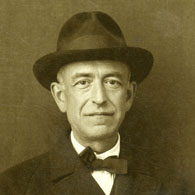
Manuel de Falla
Spain’s most important composer of the twentieth century; he absorbed prevailing trends from the Parisian avant-garde and combined them with nationalist Spanish ideas.
| 1876 | Born in Cádiz on November 23, the son of a businessman. |
| 1896–99 | Piano studies at the conservatory in Madrid; from 1902–1904, private lessons with Spanish nationalist Felipe Pedrell. |
| 1906–08 | “4 Piezas españolas” for piano. |
| 1906 | With his opera “La vida breve,” Falla wins a competition to promote Spanish nationalist operas. |
| 1907 | Relocation to Paris, acquaintance with Dukas, Debussy, Ravel, Albéniz. He is introduced to the circle of the “Apaches,” to which Ravel, among others, belongs. |
| 1909 | Songs “Tres melodías” after Théophile Gautier. |
| 1909–15 | “Noches en los jardines de España” (“Nights in the Garden of Spain”) for piano and orchestra, including Andalusian folklore elements. |
| 1913 | Premiere in Nice of “La vida breve.” |
| 1914 | Return to Madrid upon the outbreak of the world war. “Las Siete cancíones populares españolas” after texts of old Spanish songs. |
| 1915 | Premiere of the ballet “El amor brujo.” |
| 1919 | Breakthrough with the premiere in London of the ballet “El sombrero de tres picos” (“The Three-Cornered Hat”). |
| 1920 | “Homenaje: pièce de guitare écrite pour ‘Le Tombeau de Claude Debussy’” (“Homage: Guitar Piece Written for ‘Le Tombeau de Claude Debussy’”). He moves to Granada; there he explores flamenco and popular puppet theater with Federico García Lorca. |
| 1923 | Premiere in Paris of the puppet opera “El retablo de maese Pedro” (“Master Pedro’s Puppet Show”) after an episode in Don Quixote. |
| 1923–26 | Concerto for harpsichord and five instruments. |
| 1927–46 | Composition of the scenic cantata “Atlántida”: a monumental work completed by his student Ernesto Halffter and premiered posthumously in Barcelona in 1961 (in concert version) and in Milan in 1962. |
| 1939 | Relocation to Argentina. |
| 1946 | Death in Alta Gracia (Argentina) on November 14. |
Product Safety (GPSR) and Warranty

Günter Henle Verlag e.K.
Here you find information about the product’s manufacturer:Günter Henle Verlag e.K.
Forstenrieder Allee 122
81476 München
Germany
info@henle.de
www.henle.com
recommendations
autogenerated_cross_selling