Alexander Scriabin
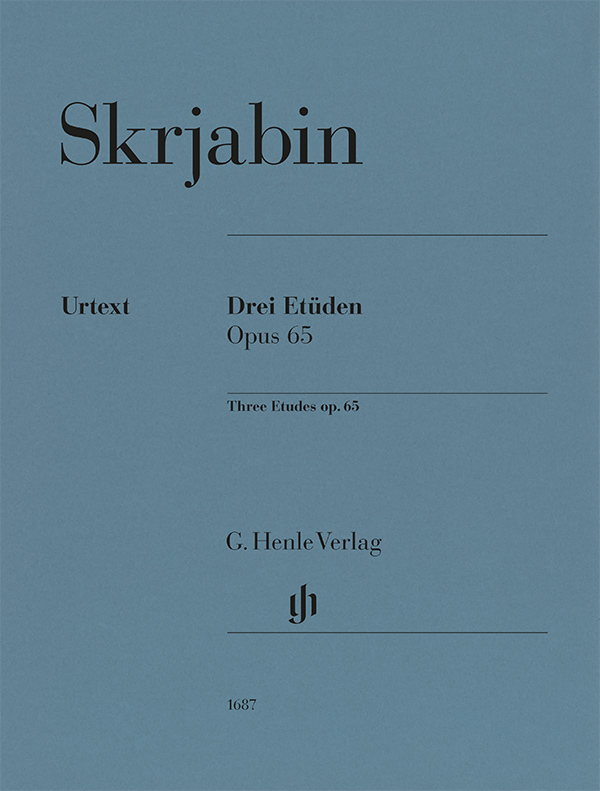
Three Etudes op. 65
Completed in 1912 and published already that same year, these Three Etudes op. 65 are assigned to Scriabin’s final creative period. Tonally, they arguably number among the composer’s most original and visionary works. Marked by the intervals of the ninth, seventh and fifth as musical building blocks, they skirt the border to atonality – and in doing so sound not only modern and virtuoso, but also exceptionally colourful and at times downright sensual. Scriabin himself, it is reported, could not even perform the first etude of op. 65. His hands were not large enough to adequately play the procession of ninths that flit swiftly across the keyboard in a ghostly pianissimo. These effective pieces thus pose many a pianistic challenge for performers. The fingerings suggested by Scriabin expert Boris Giltburg in the Henle Urtext edition offer valuable assistance.
About the Composer
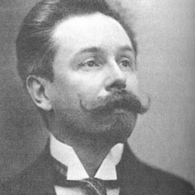
Alexander Skrjabin
Russian composer and pianist. The focal point of his oeuvre is his extremely unique piano music; in addition, he wrote important orchestral works.
| 1872 | Born in Moscow on January 6, the son of a pianist (his mother); she died in 1872. |
| 1888–92 | Piano studies at the Moscow Conservatory |
| 1888–96 | Twenty-four Preludes, Op. 11, containing all the hallmarks of Scriabin’s early period: broad, ornamental cantilenas underpinned by figurations and arpeggios in the style of Chopin, complex rhythmic structure from polyrhythms and syncopations. |
| 1892–1913 | Composition of ten piano sonatas. |
| 1896 | Travels to Paris, Vienna, Rome. |
| 1897 | Piano Concerto in F-sharp minor, Op. 20, in the style of Chopin. |
| 1897–1909/10 | He primarily composes orchestral pieces, including the major works “Le Poème de l’extase” (“The Poem of Ecstasy”) for large orchestra (1905–07), Op. 54, and “Prométhée ou Le Poème du feu” (“Prometheus or The Poem of Fire,” 1908–10); orientation toward Liszt and Wagner; programmatic music with occasional annotations in the musical score, incorporation of philosophical notions into his compositions, which are defined by various philosophical movements from around the turn of the century. Unusual intervals, harmonically at the edge of tonality. |
| 1899–1904 | Composition of his three symphonies, Opp. 26, 29, and 43. |
| 1904 | He resides in Switzerland. |
| 1906 | Invitation to the United States. |
| 1910 | Return to Russia. |
| 1908–10 | “Prométhée ou Le Poème du feu” for piano, orchestra, organ, choir, and clavier à lumière, Op. 60: enrichment of musical performance through plays of light. 1911–14, piano compositions, Opp. 61–74, with avant-garde harmonies. |
| 1913 | Beginning of the multisensory “Acte préalable” (“Prefatory Action”), which is never completed. |
| 1915 | Death in Moscow on April 27. |
About the Authors
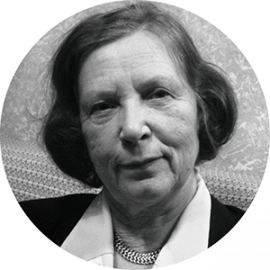
Valentina Rubcova (Editor)
Valentina Rubcova holds a doctorate in musicology, is editor-in-chief of the Moscow music publishing house “Muzyka – P. Jurgenson Publishing House” and deputy head of research at the Scriabin Memorial Museum Moscow.
Product Safety (GPSR) and Warranty

Günter Henle Verlag e.K.
Here you find information about the product’s manufacturer:Günter Henle Verlag e.K.
Forstenrieder Allee 122
81476 München
Germany
info@henle.de
www.henle.com
推荐
autogenerated_cross_selling
本书目其他版本

本书目其他版本