Rodolphe Kreutzer
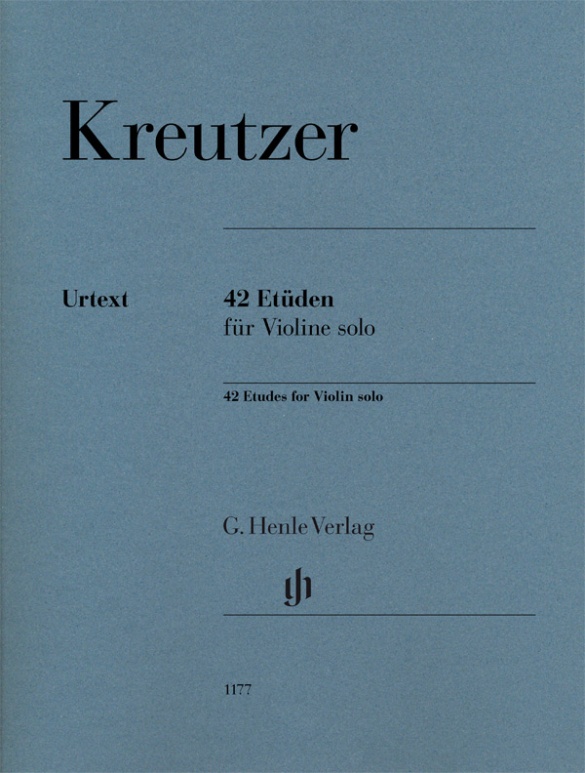
42 Etudes for Violin solo
Published in early 1806, Kreutzer’s “40 Études ou Caprices” for violin – there are 42 today – are the product of his years-long employment at the Conservatoire de Paris and are the most comprehensive collection of studies from his quill. Their systematic and complete reappraisal of essential violin technique make them an indispensable tool of the trade for every serious student of the violin (conservatory level).
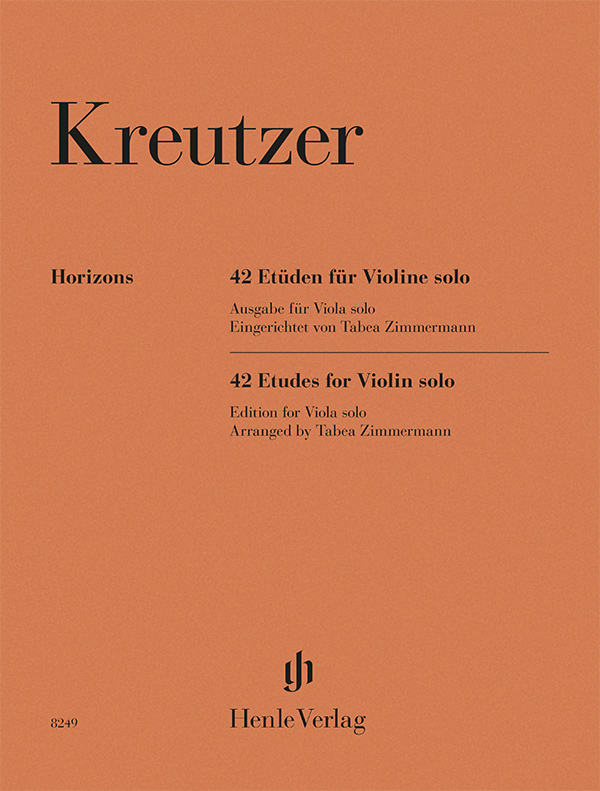
But Kreutzer’s etudes are not only played on the violin; they also belong to the daily bread of violists. The internationally acclaimed soloist and viola pedagogue Tabea Zimmermann has critically reviewed Kreutzer’s original from a violist’s perspective and made circumspect adjustments. With this edition, she gives aspiring violists the ideal basis for bringing their technique up to concert level!
About the Composer
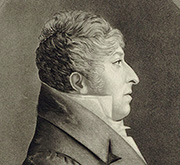
Rodolphe Kreutzer
Violinist, composer, teacher and conductor from France. Acclaimed in equal measure as a virtuoso and
composer, he went on to hold the most prestigious musical positions of the time
over the course of his career and moved in the highest circles. His
compositions include numerous stage works, violin concertos, symphonies as well
as chamber music.
| 1766 | He is born on 16 November in Versailles, the son of a musician. He receives violin lessons from an early age from his father. |
| 1778–80 | He receives lessons in composition and violin with Anton Stamitz. |
| 1780 | On 25 May he performs a concerto by his teacher Stamitz as part of the Concerts spirituels in Paris. |
| 1784 | Kreutzer performs his first violin concerto at the Concerts spirituels. |
| 1785 | Following the death of his parents he is given special support by Queen Marie Antoinette and the Duke of Artois. He becomes a member of the royal court orchestra, performs more of his own violin concertos and composes chamber music. |
| from 1789 | As an acclaimed virtuoso, he moves to Paris. His operas “Paul et Virginie” (1791) and “Lodoïska” (1792) both enjoy great success at the Comédie-Italienne. |
| from 1793 | Kreutzer is a violin teacher at the Institut national de la musique. He moves in aristocratic circles, and his salon becomes one of the most important meeting places for cultural exchange in Paris. |
| 1796/98 | Concert tours take Kreutzer to Germany, Austria and Italy among other places. |
| from 1801 | As solo violinist at the Opéra he succeeds Pierre Rode. |
| 1802 | He becomes a member of Napoleon’s chapel orchestra. |
| 1806 | He becomes a member of Napoleon’s private orchestra. |
| 1810 | A broken arm brings Kreutzer’s solo career to an end, although he is still able to play in the orchestras. |
| 1815 | He is appointed to the post of Maître de chapelle du roi. |
| 1817 | Kreutzer becomes 1st conductor of the Opéra. |
| 1824–26 | He becomes musical director of the Opéra. |
| 1831 | Kreutzer dies on 6 January in Geneva. |
About the Authors
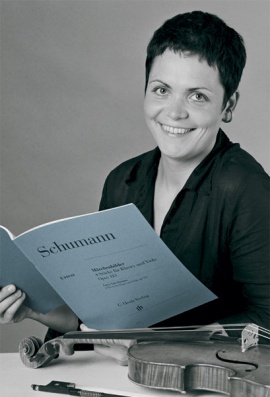
Tabea Zimmermann (Arrangement)
Product Safety (GPSR) and Warranty

Günter Henle Verlag e.K.
Here you find information about the product’s manufacturer:Günter Henle Verlag e.K.
Forstenrieder Allee 122
81476 München
Germany
info@henle.de
www.henle.com
recommendations
autogenerated_cross_selling
Further editions of this title