Johannes Brahms
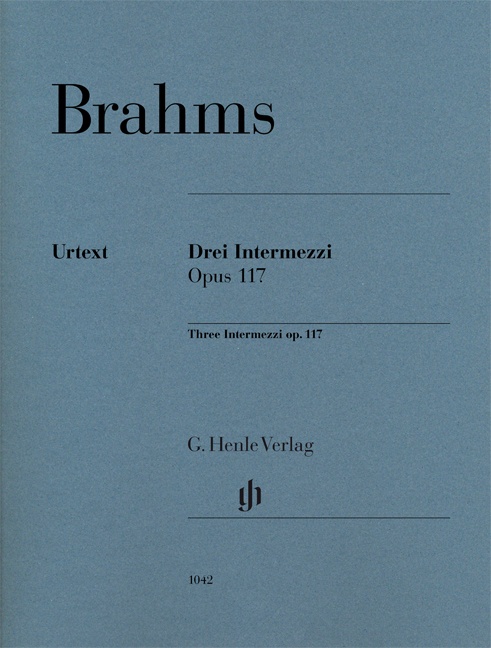
3 Intermezzi op. 117
人気のある3つの間奏曲 Op. 117は、ブラームスの晩年のピアノ作品の真髄といえるでしょう。クララ・シューマンは「これらの曲では、ついに私の魂に再び音楽的な生命が吹き込まれるのを感じ、私は熱心に演奏しています」と述べました。ブラームス自身はいつものように、簡潔にコメントしました。彼は3つの間奏曲を「子守唄」と表現することもありましたが、公にはこのタイトルを拒否しました。「それでは『不幸な母親の子守唄』あるいは『悲嘆に暮れる独身男性の子守唄』と付けなければならないだろう」と。中程度の難易度(レベル 5/6)であるこの間奏曲の新版は、新ブラームス全集の音楽テキストに基づいて改訂され、アンドレアス・ボイドによる運指が記載されています。
作曲家について
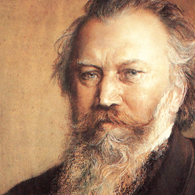
Johannes Brahms
His significant output comprises chamber music, piano works, numerous choral compositions and songs (including settings of folk-song lyrics), as well as large-scale orchestral works in the 1870s and 1880s. His compositions are characterized by the process of developing variation. He is considered an antithesis to the New German School around Liszt, and an advocate of “absolute” music.
| 1833 | Born in Hamburg on May 7, the son of a musician. His first piano instruction with Willibald Cossel at age seven, then with Eduard Marxen; first public performances from 1843. |
| 1853 | Concert tour through German cities; he meets Schumann, who announces him as the next great composer in his essay “Neue Bahnen” (“New Paths”). A lifelong, intimate friendship develops with Clara Schumann. |
| 1854–57 | Piano Concerto No. 1 in D minor, Op. 15. |
| 1857–59 | Choir director, pianist, and teacher at the royal court in Detmold. |
| 1859–61 | Director of the Hamburg Women’s Choir. |
| 1860 | Manifesto against the New Germans around Liszt. |
| 1863 | Cantata “Rinaldo,” Op. 50. |
| 1863–64 | Director of the Wiener Singakademie. |
| 1868 | Partial performance in Vienna of “A German Requiem,” Op. 45 (the complete work premiered in Leipzig in 1869) |
| 1871–74 | Artistic director of the Gesellschaft der Musikfreunde (Society of Friends of Music) in Vienna. |
| 1873 | Haydn Variations, Op. 56a, for orchestra. |
| from 1877 | His symphonic output begins with the Symphony No. 1 in C minor, Op. 68 (begun 1862); composition of the Symphony No. 2 in D major, Op. 73; the Symphony No. 3 in F major, Op. 90 (1883); and Symphony No. 4 in E minor, Op. 98 (1884–85): cantabile themes, chamber-music-like style. |
| from 1878 | Travels in Italy. |
| 1878 | Violin Concerto in D major, Op. 77, for Joseph Joachim. |
| 1881 | Piano Concerto No. 2 in B-flat major, Op. 83, with a scherzo movement. |
| 1886 | Honorary president of Vienna’s Tonkünstlerverein (Association of Musicians). |
| 1897 | Four Serious Songs, Op. 121. Dies in Vienna on April 3. |
校訂者や運指担当者について
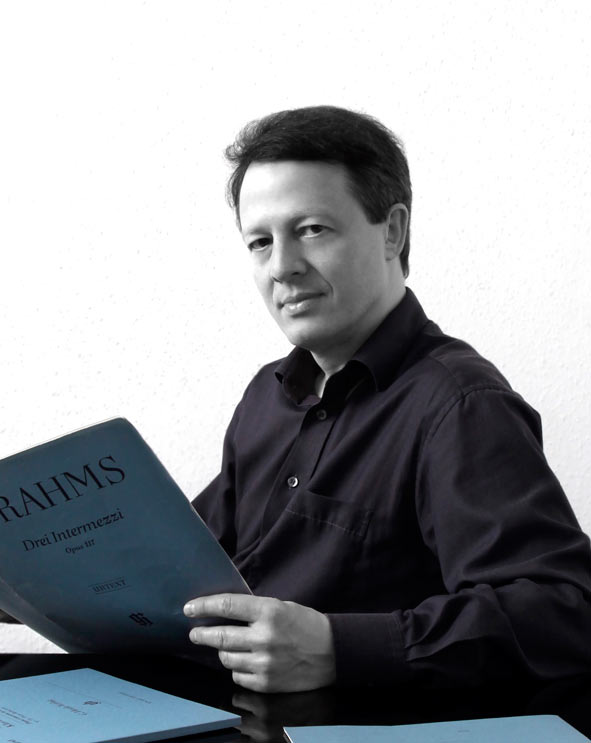
Andreas Boyde (ピアノの運指)
Andreas Boyde, was born in 1967 in Oschatz/Saxony and studied the piano in Dresden and London. He has appeared as a soloist with renowned orchestras such as the London Philharmonic Orchestra, the Sächsische Staatskapelle Dresden, the Malaysian Philharmonic Orchestra, the Prague Radio Orchestra, the Auckland Philharmonia Orchestra, the Bamberg Symphony Orchestra, the Hallé Orchestra Manchester, the Bolshoi Symphony Orchestra and the London Mozart Players.
Boyde’s repertoire comprises key works from all periods, also including contemporary composers such as Paul Schoenfield and John Pickard. Boyde has recorded Brahms’s complete solo piano works with OehmsClassics, a co-production with the WDR.
製品の安全性と保証
Günter Henle Verlag e.K.
製品の製造元に関する情報はこちらでご覧いただけます。Günter Henle Verlag e.K.
Forstenrieder Allee 122
81476 München
info@henle.de
www.henle.com
おすすめ
autogenerated_cross_selling
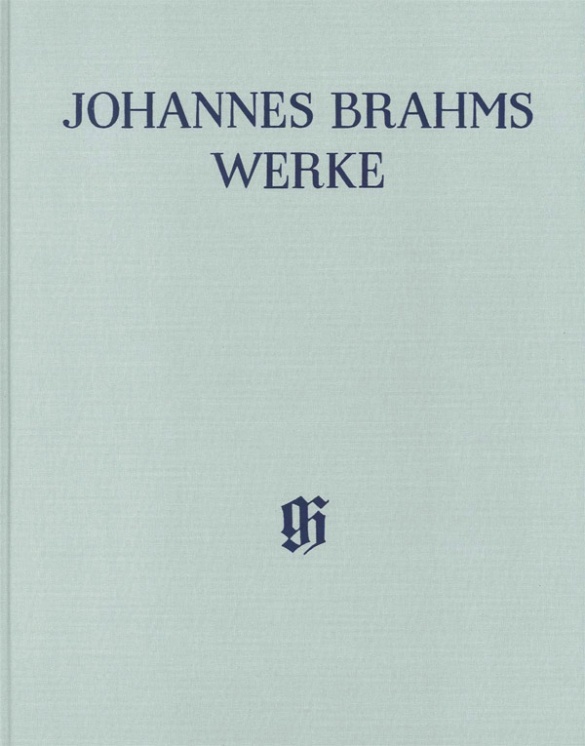
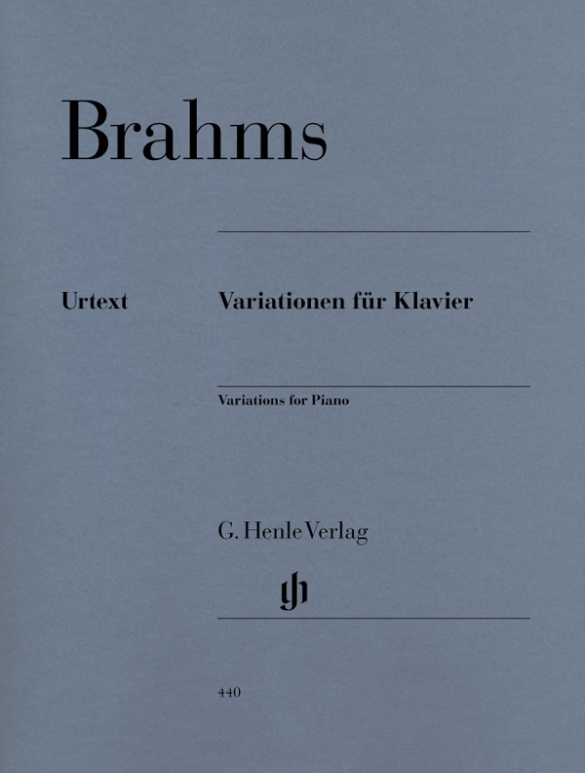
このタイトルを含む他の版