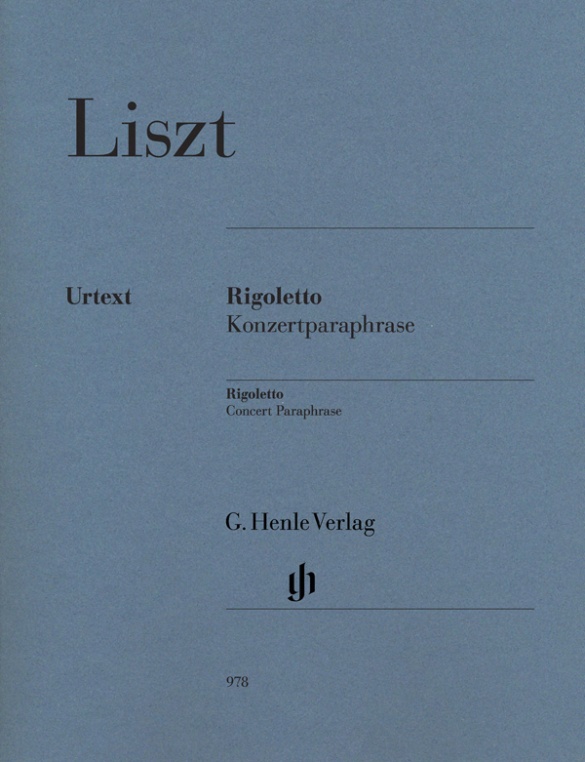
Franz Liszt
Rigoletto - Concert Paraphrase
Urtext Edition, paperbound
Piano solo
ページ数 27 (VII+20),
大きさ 23,5 x 31,0 cm
重さ 132 g
HN 978
·
ISMN 979-0-2018-0978-6
このタイトルを含む他の版
リストは、この華麗な名曲の中で、ヴェルディの「リゴレット」から3つの主題を取り上げています。クライマックスは、第3幕の四重唱「美しい愛らしい娘よ」の主題で構成されるフィナーレです。ジルダの愛に対する裏切りが明らかになるこの場面を除けば、この作品が深刻な不況の時代に作曲されたとは、その音楽からはよもや感じられません。ザイン=ヴィトゲンシュタイン公爵夫人と合法的に結婚するというリストの希望は、徐々に薄れていました。おそらく、リストのオペラ・パラフレーズは、より幸せなワイマール時代を懐かしむものとして理解すべきでしょう。
もっと読む
作曲家について
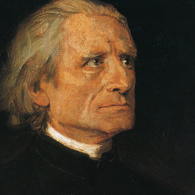
もっと読む ...
Franz Liszt
The most famous piano virtuoso of the nineteenth century is regarded as the most influential artist and composer (with Berlioz, Wagner) of the so-called New German School. His immense musical oeuvre comprises, above all else, works for solo piano, including numerous transcriptions; he also devised the symphonic poem. Important, too, are his sacred and secular choral works and songs.
| 1811 | Born in Doborján/Raiding (Sopron) on October 22, son of an official in the service of Prince Esterházy. First piano lessons from his father, early first attempts at composition, first public performance at age nine. |
| 1822 | Relocation of the family to Vienna, studies with Carl Czerny and Antonio Salieri. |
| 1823 | Relocation of the family to Paris. Composition studies with Ferdinando Paër and Antonín Reicha (1826). Performances in salons, concerts. |
| 1824–27 | Concert tours through France, to England and Switzerland. Composition of opera paraphrases for piano. |
| 1830 | Acquaintance with Berlioz, self-study by reading. He becomes Parisian society’sfavourite pianist and piano teacher. |
| 1835 | He moves to Switzerland with Countess Marie d’Agoult: their first child together, Blandine-Rachel, is born here. He continues concertizing in Paris. |
| from 1839 | Continuous concert tours throughout Europe. |
| from 1847 | Symphonic poems, including No. 2, “Tasso: lamento e trionfo”; No. 1, “Ce qu‘on entend sur la montagne” (‘Bergsymphonie,’ ‘Mountain Symphony’); “A Faust Symphony in Three Character Pictures”; “A Symphony to Dante’s Divine Comedy” (‘Dante Symphony’); as well as [No. 11], “Hunnenschlacht” (“Battle of the Huns”). |
| 1848–61 | Kapellmeister in Weimar; he advocates for progressive music (Wagner, Schumann, Berlioz). |
| 1857–62 | Oratorio, “The Legend of St. Elisabeth.” |
| 1861–68 | Resident in Rome. |
| 1865 | Takes minor holy orders. |
| 1866–72 | Oratorio, “Christus.” |
| 1871 | Appointed Hungarian court councilor; he lives in Rome, Weimar, and Budapest. |
| 1886 | Death in Bayreuth on July 31. |
校訂者や運指担当者について
.jpg)
Marc-André Hamelin (ピアノの運指)
製品の安全性と保証

G. Henle Verlag
製品の製造元に関する情報はこちらでご覧いただけます。G. Henle Verlag
Forstenrieder Allee 122
81476 München
info@henle.de
www.henle.com
おすすめ
autogenerated_cross_selling
このタイトルを含む他の版

Franz Liszt
Piano Sonata b minor
校訂: Ernst Herttrich
Study score (pocket score), Urtext Edition, paperbound
HN 9559