Franz Liszt
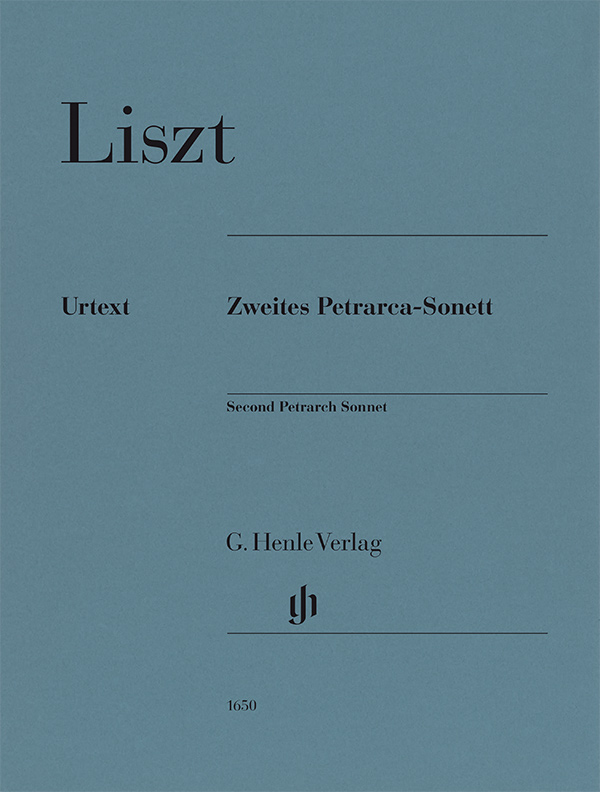
Second Petrarch Sonnet
3部からなる独奏曲集『巡礼の年』の第2巻『イタリア』では、イタリアの芸術や詩の巨匠が主役です。詩人ペトラルカと、彼が思いを寄せつつ手の届かない女性ラウラへのソネット詩集もここに含まれます。リストはイタリア編の第4番から第6番のために、理想的な3つの詩を選びました。そのうち2つ目のソネットは、熱狂と哀愁、情熱と憂鬱の間を行き来する様子を音楽的に表現しています。これは、ペトラルカが『ソネット104番』で描いている恋人の葛藤にぴったりと一致します。この曲は短いにもかかわらず、変奏がふんだんに盛り込まれています。ほんのりと哀調を帯びた主旋律が、和声的な展開と作曲作法のテクニックを用いて奏でられます。つまり「ピアノの巨匠」の代表作です。
この作品は表現と様式の点でとりわけ要求が高いものの、技術的には大部分が控えめです。『巡礼の年』シリーズの中でもっとも人気があり、改訂されたピース楽譜として原典版でお求め頂けます。
作曲家について
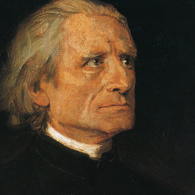
Franz Liszt
The most famous piano virtuoso of the nineteenth century is regarded as the most influential artist and composer (with Berlioz, Wagner) of the so-called New German School. His immense musical oeuvre comprises, above all else, works for solo piano, including numerous transcriptions; he also devised the symphonic poem. Important, too, are his sacred and secular choral works and songs.
| 1811 | Born in Doborján/Raiding (Sopron) on October 22, son of an official in the service of Prince Esterházy. First piano lessons from his father, early first attempts at composition, first public performance at age nine. |
| 1822 | Relocation of the family to Vienna, studies with Carl Czerny and Antonio Salieri. |
| 1823 | Relocation of the family to Paris. Composition studies with Ferdinando Paër and Antonín Reicha (1826). Performances in salons, concerts. |
| 1824–27 | Concert tours through France, to England and Switzerland. Composition of opera paraphrases for piano. |
| 1830 | Acquaintance with Berlioz, self-study by reading. He becomes Parisian society’sfavourite pianist and piano teacher. |
| 1835 | He moves to Switzerland with Countess Marie d’Agoult: their first child together, Blandine-Rachel, is born here. He continues concertizing in Paris. |
| from 1839 | Continuous concert tours throughout Europe. |
| from 1847 | Symphonic poems, including No. 2, “Tasso: lamento e trionfo”; No. 1, “Ce qu‘on entend sur la montagne” (‘Bergsymphonie,’ ‘Mountain Symphony’); “A Faust Symphony in Three Character Pictures”; “A Symphony to Dante’s Divine Comedy” (‘Dante Symphony’); as well as [No. 11], “Hunnenschlacht” (“Battle of the Huns”). |
| 1848–61 | Kapellmeister in Weimar; he advocates for progressive music (Wagner, Schumann, Berlioz). |
| 1857–62 | Oratorio, “The Legend of St. Elisabeth.” |
| 1861–68 | Resident in Rome. |
| 1865 | Takes minor holy orders. |
| 1866–72 | Oratorio, “Christus.” |
| 1871 | Appointed Hungarian court councilor; he lives in Rome, Weimar, and Budapest. |
| 1886 | Death in Bayreuth on July 31. |
校訂者や運指担当者について

Peter Jost (校訂)
Dr. Peter Jost, born in 1960 in Diefflen/Saar, read musicology, German and comparative studies at Saarland University in Saarbrücken. He did his PhD in 1988 with a thesis on Robert Schumann’s Waldszenen.
From November 1991 to April 2009 he was a research associate at the Richard Wagner Complete Edition in Munich, and since May 2009 has been an editor at Henle Publishers. His Urtext editions comprise predominantly French music of the 19th and 20th centuries, including works by Lalo, Saint-Saëns and Ravel.
製品の安全性と保証
G. Henle Verlag
製品の製造元に関する情報はこちらでご覧いただけます。G. Henle Verlag
Forstenrieder Allee 122
81476 München
info@henle.de
www.henle.com
おすすめ
autogenerated_cross_selling
このタイトルを含む他の版

このタイトルを含む他の版