Richard Strauss
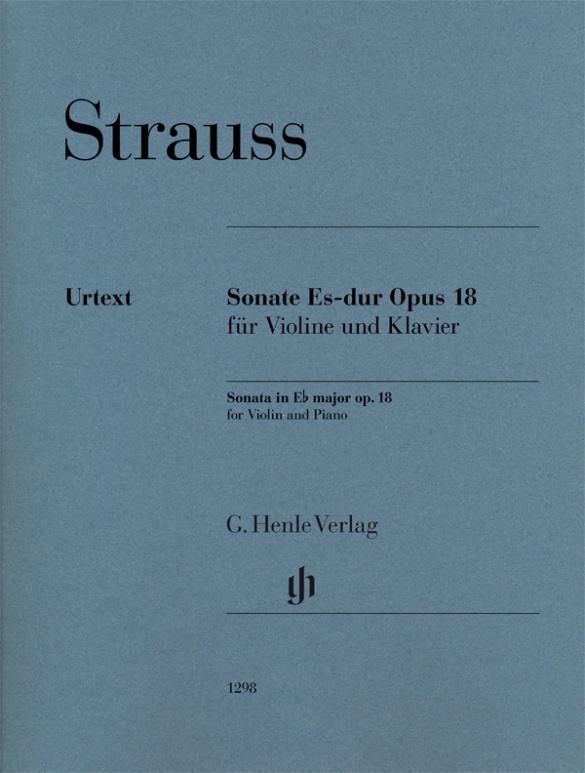
Violin Sonata E flat major op. 18
1887年の夏から秋にかけて作曲された長い一連の作品群の最後を飾るこのヴァイオリンソナタは、今日でもシュトラウスのもっとも人気のある室内楽作品のひとつです。ピアノの和声と変調の技法は第1楽章と第3楽章で室内楽の親密な枠を超え、同時期に作曲された、効果的な初期の交響詩を予感させます。技術的にも非常に難易度の高い両楽章の間におかれた「即興曲」という緩やかな中間楽章が、無言歌のような印象を与え、安らぎをもたらしています。この曲は単曲としても発表され、1900 年頃、家庭音楽やサロン音楽で大きな人気を博しました。ウルリッヒ・クレーマーがこの原典版を校訂し、ヴァイオリンパートはアラベラ・シュタインバッハーが監修し、ピアノの運指はミヒャエル・コルスティックが担当しました。
作曲家について
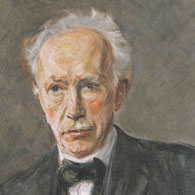
Richard Strauss
One of the most important opera composers of the twentieth century. His oeuvre comprises fifteen operas, nine symphonic poems, instrumental concerti, and a large number of songs. His stage works are marked by their great variety of genre and subject matter.
| 1864 | Born in Munich on June 11, the son of Franz Joseph Strauss, principal horn player in the court orchestra. Receives instruction in piano, violin, and composition. |
| 1885–86 | Conductor at the Meiningen Court Orchestra, initially under the tutelage of Hans von Bülow. |
| 1886 | Music director at the Munich Court Theatre. |
| 1887–1903 | He increasingly devotes himself to the symphonic poem, including “Tod und Verklärung” (“Death and Transfiguration”) in C minor, Op. 24; “Till Eulenspiegels lustige Streiche” (“Till Eulenspiegel’s Merry Pranks”) in F major, Op. 28; “Also sprach Zarathustra,” Op. 30; “Symphonia Domestica” in F major for large orchestra, Op. 53. |
| 1889–94 | Music director in Weimar. First Kapellmeister in Munich in 1894, in Berlin at the Royal Court Opera from 1898–1910. |
| 1905 | Breakthrough with the premiere of “Salome,” Op. 54. |
| 1906 | Beginning of his collaboration with Hugo von Hofmannsthal on the harmonically progressive opera “Elektra,” Op. 58, premiered in Dresden in 1909. |
| 1911 | Sensational premiere in Dresden of “Der Rosenkavalier,” Op. 59, which refers back to operatic tradition and makes him the leading German opera composer. He decides to dedicate himself primarily to operas: “Ariadne auf Naxos,” Op. 60 (1912); “Intermezzo” Op. 72 (1924); “Die ägyptische Helena,” Op. 75 (1928); “Arabella,” Op. 79 (1933); “Die schweigsame Frau,” Op. 80 (1935); “Friedenstag,” Op. 81, and “Daphne,” Op. 82 (1938); “Die Liebe der Danae,” Op. 83 (1944). |
| 1919 | Director of the Vienna State Opera. Premiere there of “Die Frau ohne Schatten,” Op. 65. |
| 1931 | Collaboration with Stefan Zweig. |
| from 1944 | Composition of his last works: Metamorphosen, for 23 solo strings, Oboe Concerto in D major, Four Last Songs. |
| 1949 | Death in Garmisch-Partenkirchen on September 8. |
校訂者や運指担当者について
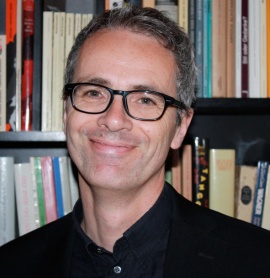
Ulrich Krämer (校訂)
Dr. Ulrich Krämer, born in 1961 in Bielefeld, is Head of the Research Centre at the Arnold Schönberg Complete Edition in Berlin. He read musicology and German in Hamburg and Bloomington and wrote his doctoral thesis under the supervision of Rudolf Stephan on Alban Berg as a pupil of Arnold Schönberg.
In addition to his editorial work, he has been a lecturer at the Hochschule für Musik “Hanns Eisler” and at the Berlin University of the Arts, as well as “Visiting Scholar” at the Graduate Center at the City University New York. Alongside the volumes he has prepared for the Schönberg Complete Edition (including the score of the Gurre Lieder which was awarded the Deutsche Musikeditionspreis), his scholarly publications include editions of Alban Berg’s student compositions and Theodor W. Adorno’s compositions found in his estate, as well as essays and articles on Brahms, Berg, Schönberg, Ravel and Astor Piazzolla.
製品の安全性と保証
Günter Henle Verlag e.K.
製品の製造元に関する情報はこちらでご覧いただけます。Günter Henle Verlag e.K.
Forstenrieder Allee 122
81476 München
info@henle.de
www.henle.com
おすすめ
autogenerated_cross_selling
このタイトルを含む他の版