Franz Liszt
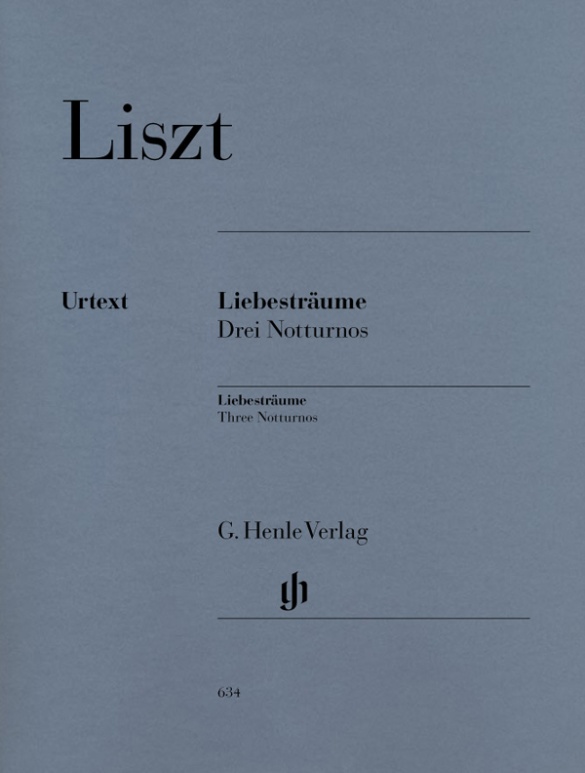
Liebesträume, 3 Notturnos
この3つのノクターンは、1850年に2つのバージョンで同時に発表されました。1つはソプラノ独唱歌曲、もう1つはピアノ独奏版です。後者のバージョンでは、歌詞がタイトルの下に記載されています(第1曲『至高の愛』、第2曲『至福の死』はルートヴィヒ・ウーラントによる歌詞、第3曲『おお、愛しうる限り愛せ』はフェルディナント・フライリヒラートによる歌詞)。3番目の愛の夢は、ノクターンの伝統を最高の形で受け継いでおり、ピアノ曲の中でも最もよく演奏される曲のひとつです。その理由のひとつは、ピアノの技巧が要求される曲であるにもかかわらず、熟練したアマチュアなら演奏が不可能ではないことです(当社の難易度は6/7)。
作曲家について
Franz Liszt
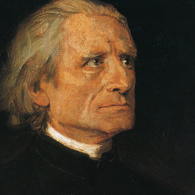
The most famous piano virtuoso of the nineteenth century is regarded as the most influential artist and composer (with Berlioz, Wagner) of the so-called New German School. His immense musical oeuvre comprises, above all else, works for solo piano, including numerous transcriptions; he also devised the symphonic poem. Important, too, are his sacred and secular choral works and songs.
| 1811 | Born in Doborján/Raiding (Sopron) on October 22, son of an official in the service of Prince Esterházy. First piano lessons from his father, early first attempts at composition, first public performance at age nine. |
| 1822 | Relocation of the family to Vienna, studies with Carl Czerny and Antonio Salieri. |
| 1823 | Relocation of the family to Paris. Composition studies with Ferdinando Paër and Antonín Reicha (1826). Performances in salons, concerts. |
| 1824–27 | Concert tours through France, to England and Switzerland. Composition of opera paraphrases for piano. |
| 1830 | Acquaintance with Berlioz, self-study by reading. He becomes Parisian society’sfavourite pianist and piano teacher. |
| 1835 | He moves to Switzerland with Countess Marie d’Agoult: their first child together, Blandine-Rachel, is born here. He continues concertizing in Paris. |
| from 1839 | Continuous concert tours throughout Europe. |
| from 1847 | Symphonic poems, including No. 2, “Tasso: lamento e trionfo”; No. 1, “Ce qu‘on entend sur la montagne” (‘Bergsymphonie,’ ‘Mountain Symphony’); “A Faust Symphony in Three Character Pictures”; “A Symphony to Dante’s Divine Comedy” (‘Dante Symphony’); as well as [No. 11], “Hunnenschlacht” (“Battle of the Huns”). |
| 1848–61 | Kapellmeister in Weimar; he advocates for progressive music (Wagner, Schumann, Berlioz). |
| 1857–62 | Oratorio, “The Legend of St. Elisabeth.” |
| 1861–68 | Resident in Rome. |
| 1865 | Takes minor holy orders. |
| 1866–72 | Oratorio, “Christus.” |
| 1871 | Appointed Hungarian court councilor; he lives in Rome, Weimar, and Budapest. |
| 1886 | Death in Bayreuth on July 31. |
校訂者や運指担当者について
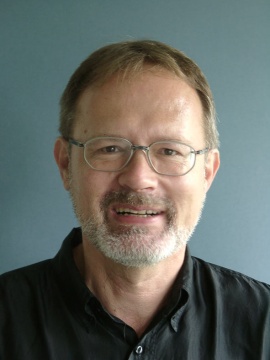
Ernst-Günter Heinemann (校訂)
Dr. Ernst-Günter Heinemann, born in 1945 in Bad Marienberg (Westerwald), completed his schooling in Gießen and read musicology, philosophy and German in Marburg and Frankfurt/Main and also for some time Protestant church music. He did his doctorate on “Franz Liszts geistliche Musik. Zum Konflikt von Kunst und Engagement”.
From 1978–2010 Heinemann worked as an editor at G. Henle Publishers (in 1978 in Duisburg, from 1979 onwards in Munich). He edited a great many Urtext editions for the publishing house, including “Das Wohltemperierte Klavier”, Volume 1 by Bach and all of Debussy’s piano works. In addition, he wrote essays on Debussy, Grieg, Liszt, Mendelssohn and questions concerning general editing, as well as giving seminars on editorial practice for musicology students in Munich.
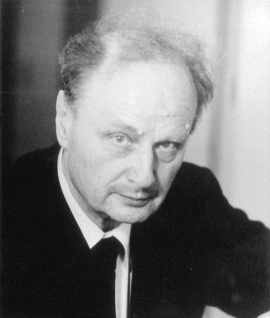
Klaus Schilde (ピアノの運指)
Prof. Klaus Schilde, born in 1926, spent his childhood in Dresden. There he was greatly influenced by Walter Engel, who taught him the piano (Kodaly method), composition and violin. From 1946–1948 he studied at the music conservatory in Leipzig with Hugo Steurer. After moving to the west in 1952 he studied with Walter Gieseking and Edwin Fischer, as well as with Marguerite Long, Lucette Descaves and Nadia Boulanger in Paris.
Schilde won numerous prizes. From 1947 onwards he gave concerts as a soloist and chamber musician on almost every single continent with renowned orchestras. He taught at the music conservatories in East Berlin Detmold, West Berlin, Munich, Tokyo (Geidai) and Weimar. From 1988–1991 he was President of the Staatliche Hochschule für Musik und Theater in Munich, where he also taught for decades as a professor. There are numerous radio and television broadcasts with Klaus Schilde as well as CD recordings. Schilde has contributed fingerings to almost 100 Henle Urtext editions.
Prof. Klaus Schilde passed away on 10 December, 2020.
製品の安全性と保証
G. Henle Verlag
製品の製造元に関する情報はこちらでご覧いただけます。G. Henle Verlag
Forstenrieder Allee 122
81476 München
info@henle.de
www.henle.com
おすすめ
autogenerated_cross_selling
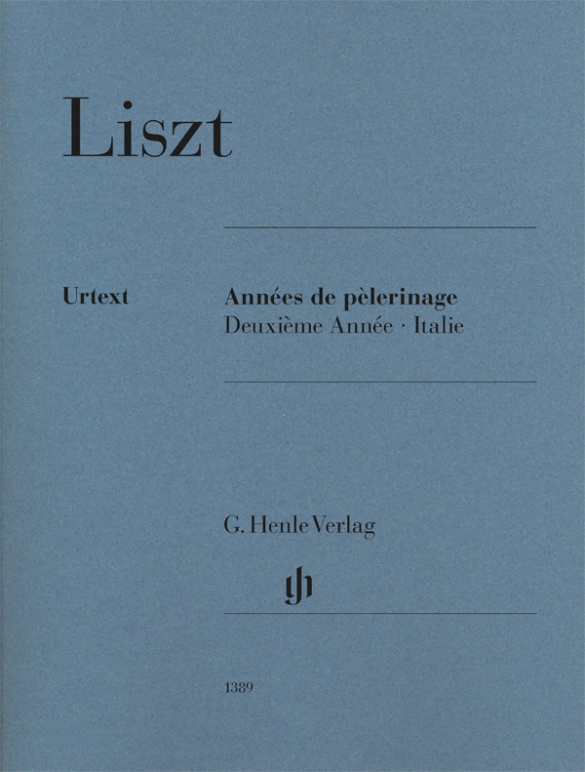
このタイトルを含む他の版

このタイトルを含む他の版